What Happens After Being Sued for Violating ADA Website Compliance?
Sued for violating ADA website compliance? What happens next, what one small store paid to settle, the cases big brands lost, and how to avoid a repeat suit.
Table of contents
If you have just been sued for violating ADA website compliance, you are not alone and you are not out of options. Plaintiffs filed 3,117 website accessibility lawsuits in U.S. federal court in 2025, up 27% from 2024 (Seyfarth Shaw), and UsableNet counted more than 5,000 across federal and state courts (UsableNet 2025 year-end report). Most were filed against online stores.
This guide explains what happens next, using one small business’s real experience, the costs large brands have paid, and what a defense attorney told other owners in the same position. It ends with how to avoid being sued again.
This article is general information, not legal advice. If you have been served, talk to a lawyer who defends ADA cases before you respond.
One Small Store Sued for Violating ADA Website Compliance
In 2022, the owner of a small e-commerce business posted on Reddit that a class action had been filed against them. The complaint said their website “discriminates” against people who are visually impaired because it lacked basic accessibility features. The owner wrote that they had never once considered this could happen to a business their size.
Here is what happened next, in their words and ours:
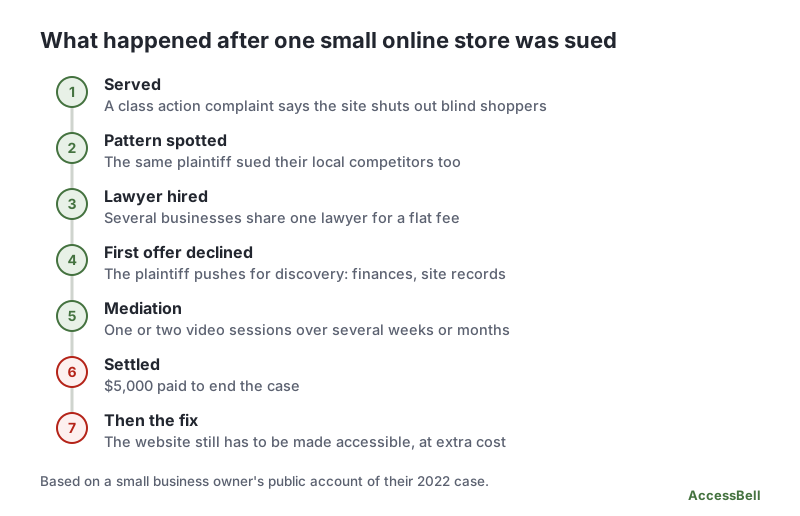
- They found a pattern. The same person who sued them had filed the same suit against all of their local competitors.
- They shared a lawyer. One competitor brought an offer from a lawyer willing to represent the group for a flat fee, which the owner remembered as “a couple thousand” dollars, as long as the case did not go to trial. The lawyer negotiated and handled the filings.
- They tried to push back, and it got harder. When they turned down a $5,000 offer, the plaintiff pushed for discovery: financial statements plus logs and records about how the website was built and maintained.
- They mediated and settled. After weeks to months of negotiating and one or two mediation sessions on Zoom, they settled for $5,000.
- Then they still had to fix the site. The settlement required the fixes, and those cost extra, depending on how complex the site was.
The owner’s summary was blunt: the first feeling of being sued is the worst, it feels like an unfair fight, and in the end it was a headache they paid a few thousand dollars to cure.
What Happens After You Are Sued for Violating ADA Website Compliance
That story follows the usual path. The main stages are:
- Service. You receive the summons and complaint. In federal court you generally have 21 days to respond. Missing the deadline can lead to a default judgment.
- A response. Your lawyer files an answer or a motion to dismiss, or agrees an extension so the two sides can talk.
- Negotiation or mediation. Many courts push access cases toward early mediation. This is where most cases are decided in practice.
- Discovery, if talks stall. Both sides exchange documents and evidence. This is where defense costs climb fastest, as the store above found.
- Settlement. Almost all cases end here. A typical agreement sets a deadline to fix the site, a monitoring period, the plaintiff’s attorney fees and, where state law allows, damages.
- Trial. Rare, slow and expensive.
For deadlines and timelines at each stage, read our step-by-step guide to the ADA lawsuit process. If you received a letter rather than a lawsuit, start with what to do about an ADA demand letter.
What the Plaintiff Can Win
Under Title III of the ADA, a private plaintiff can win a court order to fix the barriers plus their attorney fees and costs, but not money damages. State laws change that. California’s Unruh Civil Rights Act adds minimum statutory damages of $4,000 per violation, which is why so many cases are filed there. Our California accessibility law page and New York page cover the state rules.
What a Defense Attorney Said About Being Sued
In the same thread, an attorney who said they had defended these cases shared some general observations. They are one lawyer’s views, not legal advice, but they match patterns seen in the data:
- Settling can invite more lawsuits. A settlement only ends that one plaintiff’s claims. If the site is still inaccessible, the next plaintiff can sue over the same barriers. UsableNet counted 1,427 digital accessibility lawsuits in 2025 against companies that had already been sued.
- The cases can be defended by a lawyer who understands both the law and the technology.
- Small businesses are hit hardest, partly because they are less likely to hire experienced counsel. UsableNet found that 64% of companies sued in the first half of 2025 had revenue under $25 million (UsableNet 2025 midyear report).
- Many suits are a numbers game. If a case stops making financial sense for the plaintiff’s lawyer, it is often dropped. An experienced defense lawyer can estimate the likely settlement and the cost of fighting, so you can choose with real numbers.
One point needs a caveat. The attorney mentioned that a strong defense could let you recover your attorney fees. The ADA does let courts award fees to the prevailing party (42 U.S.C. § 12205), but courts generally award them to a winning defendant only when the suit was frivolous or without foundation. Treat fee recovery as a possibility, not a plan.
What Big Companies Paid After Being Sued
Large brands have been through the same process with far bigger numbers:
| Company | What happened | What it cost |
|---|---|---|
| Target (2008) | Blind shoppers could not use Target.com with a screen reader. Settled as a class action. | $6 million in class damages, plus about $3.7 million in the plaintiffs’ attorney fees and costs |
| Netflix (2012) | Streaming video lacked captions. Settled with the National Association of the Deaf. | $755,000 in attorney fees and costs, $40,000 for monitoring, and captions on the full library by 2014 |
| H&R Block (2014) | A U.S. Department of Justice consent decree over its website and apps. | $45,000 to two plaintiffs and a $55,000 civil penalty, plus WCAG 2.0 AA conformance |
| Winn-Dixie (2017) | Lost at trial. The ruling was reversed on appeal in 2021 and later vacated as moot. | The company estimated the ordered fixes at $250,000 or more, and the court awarded about $100,000 in fees before the appeal |
| Domino’s (2016 to 2022) | Fought a blind customer’s suit to the Supreme Court, which declined to hear it in 2019. | Six years of litigation before a confidential settlement in 2022 |
| Fashion Nova (2025) | Agreed a class settlement over a site blind shoppers could not use. | A proposed $5.15 million fund. The DOJ opposed it in 2026, and the court had not ruled on final approval as of early 2026 |
Sources: W3C WAI on NFB v. Target, Seyfarth Shaw on NAD v. Netflix, DOJ on H&R Block, Hunton on Gil v. Winn-Dixie, BOIA on Robles v. Domino’s and DOJ on Alcazar v. Fashion Nova.
Winn-Dixie is the lesson in that table: even the company that eventually won spent years in court and faced a six-figure bill for the fixes along the way.
How to Avoid Being Sued for Violating ADA Website Compliance
The cheapest lawsuit is the one that never gets filed. Common barriers take minutes to spot, so the goal is simple: make sure your site is not the easy target.
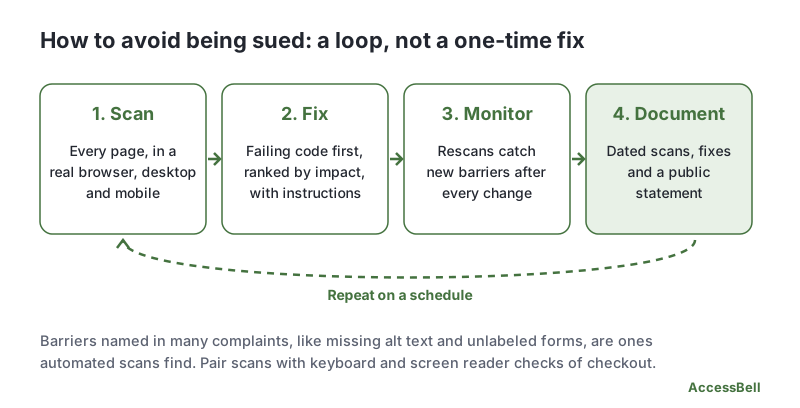
- Scan every page, not just the home page. Complaints often name product pages, carts and checkout. The AccessBell website accessibility checker tests each page in a real browser on desktop and mobile against WCAG 2.2.
- Fix what blocks people first. AccessBell ranks issues by impact and shows the failing element, where it is on your page and the corrected code. Common complaint items include missing alt text, unlabeled form fields (3.3.2 Labels or Instructions), low color contrast and buttons with no name (4.1.2 Name, Role, Value).
- Monitor, because sites change. A new product template, theme update or plugin can undo last month’s fixes. AccessBell rescans your monitored pages every day and emails you when a new critical issue appears.
- Document the effort. Keep dated scan reports, a record of fixes and a public accessibility statement with a way to report problems. AccessBell stores every scan and keeps your accessibility statement current. Its Compliance Vault exports a dated evidence package of your scans, fixes and notes that anyone can verify. If you are ever sued, that record shows good faith and speeds up any settlement.
- Test the journeys that matter by hand. Automated tools cannot catch everything. Check checkout, sign-up and contact forms with a keyboard and a screen reader. Our guide to automated vs manual accessibility testing explains how to split the work.
- Skip the overlay shortcut. Widgets that sit on top of a site do not fix the code underneath, and sites using them keep getting sued. See our accessiBe alternative guide for why.
What Prevention Costs Compared With Being Sued
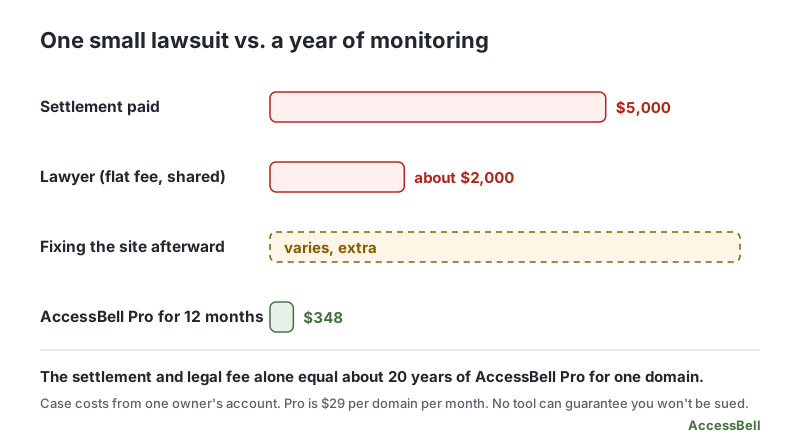
AccessBell Pro is $29 per domain per month, or $199 per domain per year on the annual plan, and monitors up to 500 URLs per domain. A year costs $348 billed monthly or $199 billed annually, less than a tenth of the small store’s settlement either way, and you pay to fix your site either way. The difference is whether you fix it on your schedule or on a plaintiff’s. See pricing and the lawsuit cost comparison for the numbers side by side.
No tool can guarantee you will never be sued, and AccessBell does not claim to. What it does is find the barriers plaintiffs look for, show you how to fix them and keep proof that you did.
If You Have Already Been Sued
- Calendar the response deadline and do not ignore the complaint.
- Hire a lawyer who defends ADA cases. Ask other local businesses whether they were named too. Like the store above, you may be able to share one.
- Tell your insurer. Some policies cover defense costs.
- Keep records of your website, scans and changes.
- Start fixing now. Run a free ADA compliance check, fix the barriers named in the complaint first, and document each fix.
- Stay fixed after you settle, so the next plaintiff finds nothing to sue over.
Conclusion
Being sued for violating ADA website compliance usually means a complaint, a 21-day deadline, a few months of negotiation and a settlement, followed by the work of fixing the site anyway. For one small store that meant $5,000 plus legal fees. For Target it meant almost $10 million.
The fix is the same in every case: an accessible website, checked regularly, with a record that proves it. Run a free scan of your site to see what a plaintiff’s tester would see, or start a 3-day free trial to monitor up to 500 URLs per domain every day.
Frequently Asked Questions
What happens after being sued for violating ADA website compliance?
You are served with a complaint and usually have 21 days to respond in federal court. Most cases then move into negotiation or mediation and end in a settlement: you agree to fix the website by a deadline, pay the plaintiff's attorney fees and, in states such as California and New York, often some damages. Very few cases reach trial. Our guide to the ADA lawsuit process covers each stage.
How much does it cost to settle an ADA website lawsuit?
It varies with the court, the state and how long you fight. One small online store settled for $5,000 plus a shared flat legal fee of a couple of thousand dollars, then paid separately to fix its site. Large companies have paid far more: Target paid $6 million in class damages plus about $3.7 million in the plaintiffs' attorney fees. Ask a lawyer for an estimate based on your case.
Can I be sued again after I settle?
Yes. A settlement only ends the claims of the person who sued you. If the website is still inaccessible, another person can sue over the same barriers. UsableNet counted 1,427 digital accessibility lawsuits in 2025 against companies that had already been sued.
Can I get my legal fees back if I win?
Rarely. The ADA lets a court award fees to the prevailing party, but courts generally award them to a winning defendant only when the lawsuit was frivolous, unreasonable or without foundation. Do not plan your defense around recovering fees.
Will an accessibility scanner stop me from being sued?
No tool can promise that. Continuous scanning finds many of the barriers that complaints cite, such as missing alt text, unlabeled form fields and buttons with no name, so you can fix them before someone else finds them. It also leaves a dated record of your testing and fixes. Pair it with keyboard and screen reader checks of your key journeys.
Do small businesses really get sued over their websites?
Yes. UsableNet's 2025 midyear report found that 64% of the companies sued in the first half of 2025 had annual revenue under $25 million. E-commerce sites are the most common target.
How we reviewed this article
- Current version
First published. Case figures checked against court records and reporting on NFB v. Target, NAD v. Netflix, the DOJ's H&R Block consent decree, Gil v. Winn-Dixie, Robles v. Domino's and Alcazar v. Fashion Nova. Filing counts from Seyfarth Shaw and UsableNet.