ADA Title III Law for Businesses: What It Means for Your Website
ADA Title III law for businesses explained: who it covers, how it applies to websites, what the DOJ and courts expect, the risks and a practical compliance plan.
Table of contents
ADA Title III law for businesses requires companies that serve the public to make their goods and services accessible to people with disabilities. That started with physical barriers such as steps, doorways and restrooms, but today it reaches websites and apps too. Most website accessibility lawsuits in the United States are brought under Title III. This guide explains ADA Title III law for businesses in plain English: who it covers, how it applies to your website, what the Department of Justice and the courts expect, and a practical plan to reduce your risk.
This article is general information, not legal advice. For decisions about your business, talk to a lawyer.
What Is ADA Title III?
The Americans with Disabilities Act (ADA) became law in 1990. It has five titles. Title III covers public accommodations: privately owned businesses and nonprofits that are open to the public. It prohibits discrimination on the basis of disability in the “full and equal enjoyment of the goods, services, facilities, privileges, advantages, or accommodations” of those businesses (42 U.S.C. 12182).
In practice, ADA Title III law for businesses means people with disabilities must be able to use what you offer the public, whether they visit in person, call you or use your website.
Which Businesses Does ADA Title III Law Cover?
The ADA lists 12 categories of public accommodation (42 U.S.C. 12181). Together they cover most businesses that deal with the public, including:
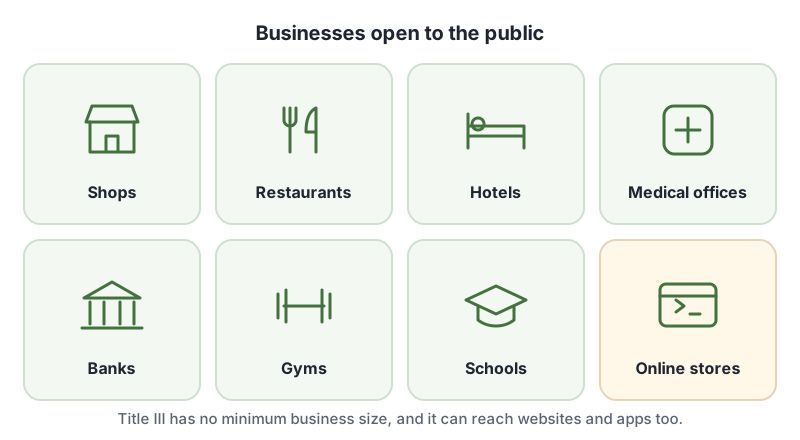
- Hotels and other places of lodging
- Restaurants and bars
- Theaters, stadiums and other places of entertainment
- Shops, malls and other sales or rental businesses
- Service businesses, such as banks, law firms, accountants, doctors’ and dentists’ offices, hospitals and repair shops
- Museums, libraries, parks and zoos
- Private schools, from nursery schools to universities
- Day care centers and social service centers
- Gyms, golf courses and other places of exercise or recreation
- Stations used for public transportation
There is no minimum size. A one-person shop is covered just like a national chain. Title III is also separate from Title II, which covers state and local governments.
Does ADA Title III Law Apply to Business Websites?
The ADA was written before the web, so the statute does not mention websites. The Department of Justice (DOJ), which enforces the ADA, has made its position clear. In its guidance on web accessibility and the ADA, the DOJ says businesses open to the public must make sure their websites are accessible to people with disabilities, and that it has long held that the ADA applies to the goods and services businesses offer on the web.
Courts have largely agreed when a website is connected to a physical business. In Robles v. Domino’s Pizza, the Ninth Circuit held in 2019 that the ADA applied to Domino’s website and app because they connected customers to its restaurants. The Supreme Court declined to review that decision.
For online-only businesses, courts disagree. Some federal courts require a “nexus” between the website and a physical place; others have applied Title III to businesses that exist only online. Where you can be sued matters, and some states add their own laws on top. See our pages on website accessibility laws in California, New York and Florida.
What Standard Does ADA Title III Law Expect?
There is no official technical standard for business websites under Title III. The DOJ’s guidance says businesses have flexibility in how they comply, and points to existing standards, including the Web Content Accessibility Guidelines (WCAG), as helpful guidance.
In practice, WCAG 2.1 Level AA is the benchmark. It is the level used in most settlements and court orders, and it is the standard the DOJ adopted in 2024 for state and local government websites under Title II. Meeting the newer WCAG 2.2 Level AA covers everything in 2.1 AA and more.
Our ADA website compliance guide explains the standards in more detail, and our free ADA compliance checker scans any page against WCAG 2.1 AA.
Common Website Barriers Behind Title III Claims
Most website accessibility complaints involve a familiar set of problems:
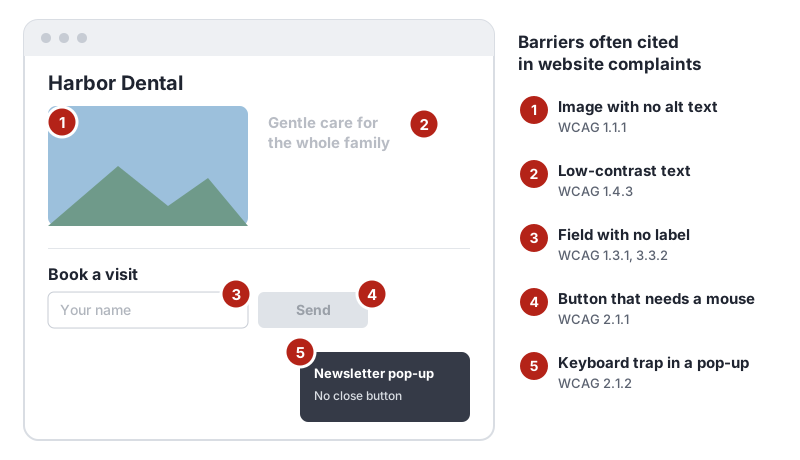
- Images without text alternatives, so screen reader users miss products, menus and offers. See WCAG 1.1.1 Non-text Content.
- Low-contrast text that people with low vision cannot read. See WCAG 1.4.3 Contrast (Minimum).
- Forms without labels, such as booking, contact and checkout forms. See WCAG 3.3.2 Labels or Instructions.
- Menus, buttons and pop-ups that need a mouse, which block keyboard and screen reader users. Our keyboard accessibility testing guide shows how to check.
- Videos without captions, which leave out people who are deaf or hard of hearing.
What Happens If a Business Does Not Comply?
- Demand letters. Many claims start with a letter asking you to fix the site and pay a settlement. Our guide to responding to an ADA demand letter explains what to do.
- Private lawsuits. Under Title III, an individual can ask a court to order you to fix the barriers and to pay their attorneys’ fees (42 U.S.C. 12188). Federal Title III does not award them money damages, but state laws such as California’s Unruh Civil Rights Act can. Our guide to the ADA lawsuit process walks through each stage.
- Department of Justice enforcement. The DOJ can sue businesses and seek civil penalties. The statute set them at up to $50,000 for a first violation and $100,000 for later ones, and the DOJ raises those amounts for inflation.
Fixing problems early costs far less than responding to a claim, and it opens your business to more customers.
An ADA Title III Compliance Plan for Businesses
ADA Title III law for businesses does not require perfection overnight, but it does expect real, ongoing effort:
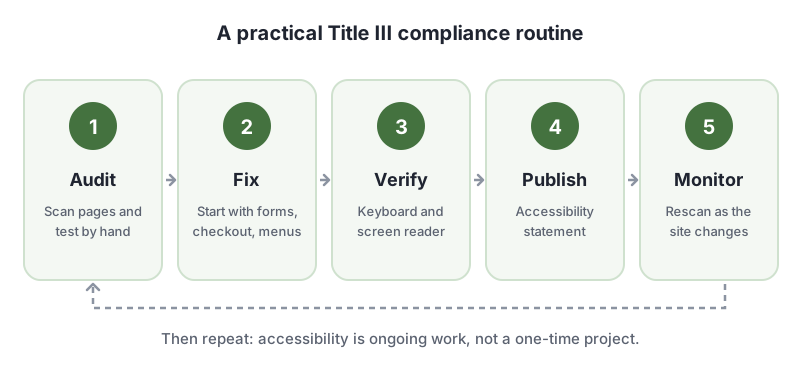
- Audit your site. Run an automated scan of your key pages, then test by hand. Automated tools find many issues but not all of them; our guide to automated vs manual accessibility testing explains the split.
- Fix the most important journeys first. Booking, contact forms, checkout, menus and anything customers need to buy from you or reach you.
- Verify the fixes with a keyboard and a screen reader, not only with a tool.
- Publish an accessibility statement that explains your commitment and how people can report problems. Our free accessibility statement generator creates one in minutes.
- Monitor and repeat. New pages, plugins and content introduce new issues. Rescan regularly, especially after changes.
- Avoid quick fixes. Overlay widgets do not change your site’s code, and businesses using them are still sued. See our accessiBe alternative guide for why.
Tax Help for Small Businesses
Eligible small businesses, generally those with 30 or fewer full-time employees or $1 million or less in revenue in the previous year, may be able to claim the IRS Disabled Access Credit for costs of complying with the ADA. The credit is 50% of eligible expenses between $250 and $10,250 in a year, up to $5,000. See IRS Form 8826 and ask your tax adviser whether your website costs qualify.
Check Your Website Against ADA Title III Expectations
Start with the pages customers use most. Run a free WCAG scan of your homepage, a product or service page and your contact or booking form, then work through the fixes. To keep your site accessible as it changes, AccessBell Pro monitors up to 500 pages per domain every day; start a 3-day free trial.
Frequently Asked Questions
Does ADA Title III apply to small businesses?
Yes. Unlike Title I, which covers employers with 15 or more employees, Title III has no minimum size. If your business is a public accommodation, such as a shop, restaurant, clinic or hotel, Title III applies whatever its size.
Is there an official WCAG requirement for business websites under Title III?
Not in a regulation. The Department of Justice has not adopted a technical standard for Title III websites, and says businesses have flexibility in how they make their sites accessible. It points to the Web Content Accessibility Guidelines (WCAG) as helpful guidance, and WCAG 2.1 Level AA is the level most settlements and courts use.
Can a business be sued under Title III for its website?
Yes. Private individuals can sue under Title III for injunctive relief, meaning an order to fix the barriers, plus attorneys' fees. Federal Title III does not give private plaintiffs money damages, but some state laws do, and the Department of Justice can seek civil penalties.
Does Title III cover businesses that only operate online?
Courts disagree. Some federal courts require a connection between the website and a physical place of business, while others have applied Title III to online-only businesses. Many state laws can also apply. Because the answer depends on where you are sued, online-only businesses should treat accessibility as a real legal risk.
How we reviewed this article
- Current version
First published. Checked against the text of the ADA (42 U.S.C. 12181 and 12188), the Department of Justice web accessibility guidance on ADA.gov and IRS guidance on the Disabled Access Credit.